
Onsite 3D Printing Cuts Costs and Downtime at Georgia-Pacific Facilities
June 1, 2026
Atlanta
Georgia‑Pacific Uses 3D Printing to Quickly Innovate, Reduce Costs and Increase Safety
Georgia‑Pacific’s plant‑floor 3D printing is an example of teams replacing slower-to-procure, more expensive methods with better ones. In other words, creative destruction. Across our facilities, teams are using 3D printing in innovative ways to solve manufacturing challenges faster, safer and at a fraction of the cost. What makes this more effective is that it is driven by a bottom-up approach. It starts on the plant floor, where employees know the equipment best and see opportunities firsthand.
At facilities like Muskogee (Oklahoma) and Brewton (Alabama), 3D printing has become an in-house source for items that are costly, time‑consuming or difficult to source through traditional channels. Engineers and maintenance teams are designing and producing small parts and novel and protective solutions tailored to real operational needs, replacing long lead times and process frustrations with on-demand production.
How Georgia‑Pacific Uses 3D Printing in Manufacturing
In Muskogee, drafter Nate Yarbrough leads much of this work, using CAD software to model parts. Ideas often come directly from operators and mechanics. “It’s not a solution for everything,” Nate says, “but it is for a lot of things.”
One example is small tabs on junction boxes for LGVs (Laser Guided Vehicles). Instead of ordering an entire replacement box for a single broken tab, the team 3D printed just the tab, cutting the cost to a nominal amount and significantly reducing downtime. Nate has also created custom mounts for turnstile cameras and protective cages for drones so they can safely fly in tight spaces without risking damage.
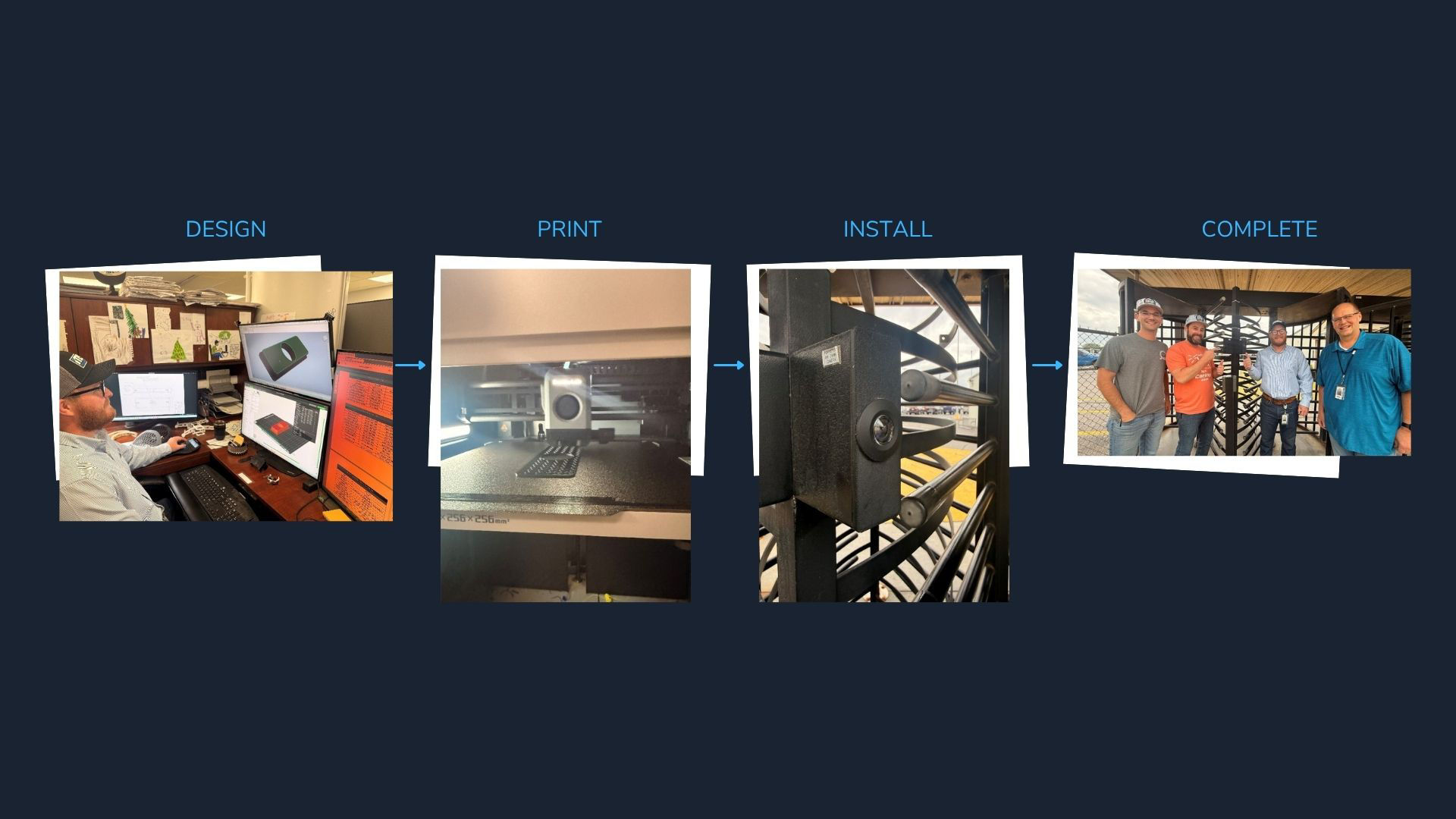
3D Printing for Process Human Factors & Operational Efficiency
At Brewton, maintenance learning and development lead, Kyle Null, has embraced 3D printing to enhance process reliability and operator safety. In the demineralized water area, operators previously collected multiple process samples using individual glass beakers, carrying them between their fingers. Doing this increased handling and breakage risk and made sample mix-ups more likely.
To address this, the team designed a custom 3D-printed sample organizer for the beakers. The organizer helps operators collect all required samples in a single pass while maintaining clear and consistent organization while also reducing breakage risk, reinforcing process discipline and making training more intuitive for new operations. Utilities field operator Orlando Gandy shared the impact, “The new cart and water sample organizer makes my job much more efficient and safer. No broken glass cylinders. If I get interrupted, I instantly know exactly where I left off without fail.”
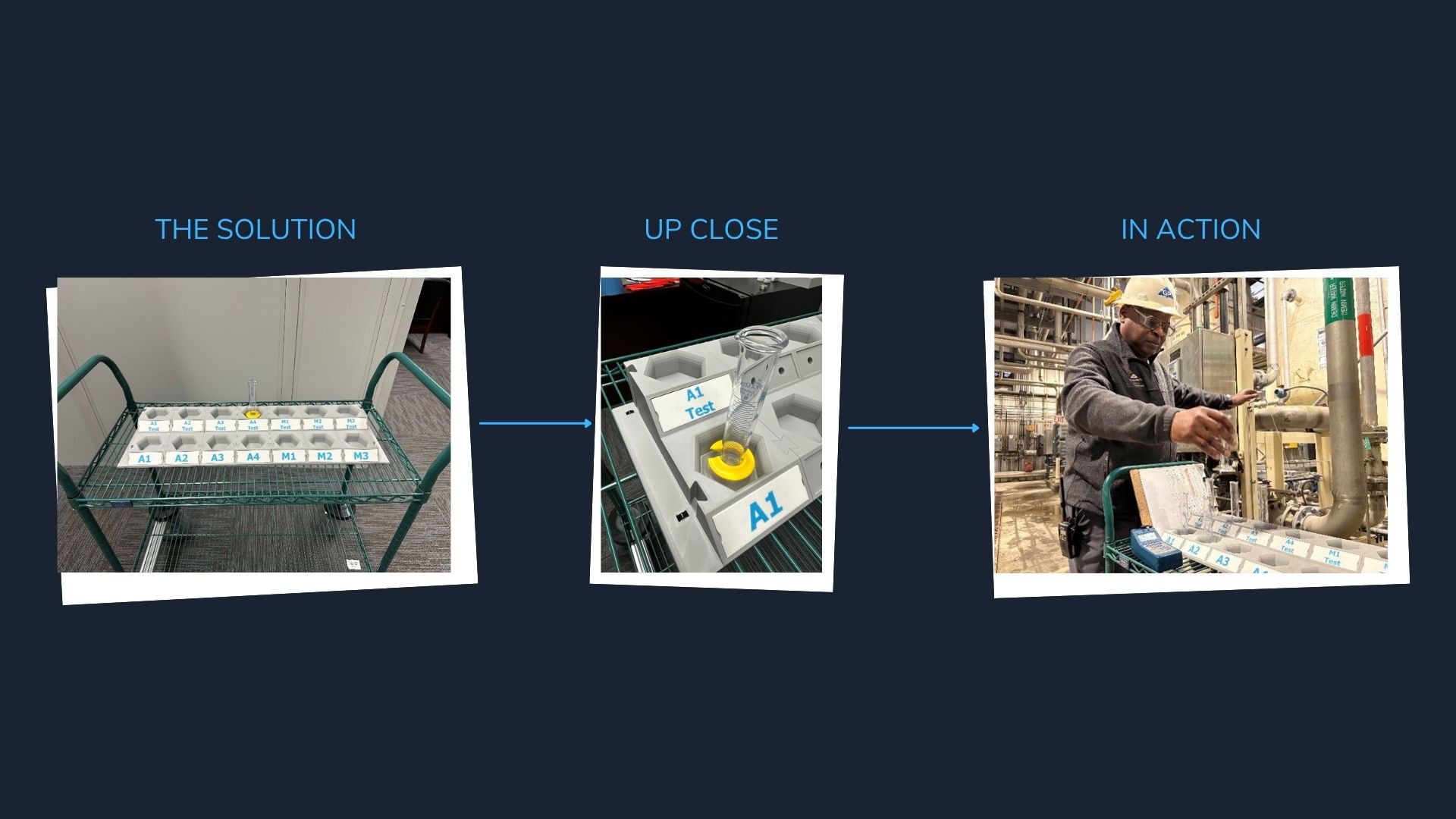
Safety, Compliance, and Responsible Innovation
Safety and compliance remain central to every design and print. Printed parts must be reviewed and approved before use, and safety‑related items are often produced in distinct colors. Teams are also careful to respect legal and “right‑to‑repair” considerations, avoiding patented components while still enabling safe repairs to GP‑owned equipment.
The Future of 3D Printing at Georgia‑Pacific and Koch
The technology continues to evolve quickly, including advances in metal 3D printing, and teams are already exploring more robust printers to expand what’s possible. Support and contributions from prototype supervisor Matt Williquette who leads the Krē8 lab at the Neenah Technical Center in Wisconsin have also helped strengthen these efforts.
While many of these advancements are happening at Georgia‑Pacific, additive manufacturing capabilities and demand are growing across Koch as well. The Additive Manufacturing workstream within the Koch Republics group brings together employees throughout Koch. As the network expands, teams are sharing designs, lessons learned and best practices to accelerate 3D adoption enterprise‑wide.
Kyle notes, “There are tremendous opportunities happening in our facilities.” From custom glue‑head guards that prevent burns to low‑cost replacement parts, 3D printing is proving that innovation can thrive at even our most established mills, and that empowering employees to create solutions can make a real difference.
Share this article